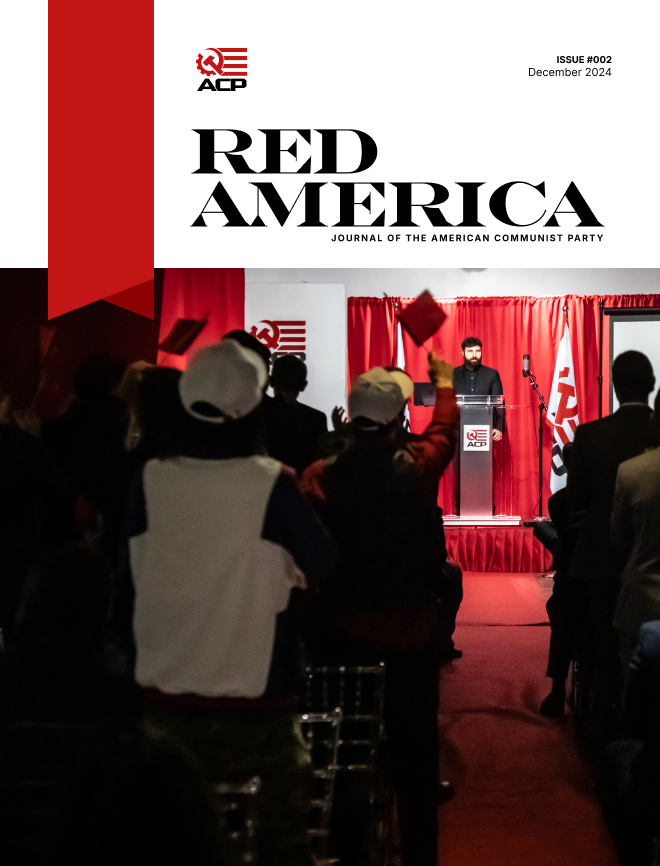
Marxism–Leninism, the Communist Party, and Education
Abstract
This article, Marxism–Leninism, the Communist Party, and Education: Speech at the 1st National Convention of the ACP, sets forth a philosophical and organizational framework for education within the American Communist Party (ACP), grounding it in the dialectical materialist tradition of Marx, Lenin, Gramsci, Mao, and Ilyenkov. Carlos L. Garrido argues that revolutionary theory must be consciously cultivated and cannot emerge spontaneously from the economic struggles of the working class. Education, therefore, becomes a central instrument in raising class consciousness and forging a genuine vanguard party “guided by the most advanced theory.” Drawing from Lenin’s What Is to Be Done?, Gramsci’s notion of “common-sense philosophy,” and Mao’s principle that communists must be both pupils and teachers of the masses, Garrido outlines a dialectical approach to education — one that develops intellectual rigor while remaining grounded in the lived realities of the American working class. Rejecting scholastic dogmatism and the fetishization of ideological “purity,” he emphasizes that Marxism–Leninism is a creative, evolving worldview, not a static collection of doctrines. True education, he insists, must teach comrades “how to think” rather than merely what to think, cultivating theoretical flexibility and revolutionary imagination. In positioning Marxist–Leninist education as both liberatory and formative, the article provides a foundational vision for the ACP’s pedagogical mission and a philosophical corrective to the ossification of socialist thought in the Western world.
Keywords
Marxism–Leninism, revolutionary education, dialectical materialism, class consciousness, anti-dogmatism, Carlos L. Garrido